

What I learned from Duolingo
- Exposing game’s hidden super power
- Practicality: ♥ ♥ ♥ ♥ ♥
- Theoretical: ♥ ♥ ♥ ♥ •
The fundamental quality of games is not in their presentation, their interactivity, their rewards but it is way more fundamental, and goes way deeper than any of us think about – and it’s the number one reason why serious games, applied games, edutainment and all of these type of game fail, because they do not understand this fundamental principle. Repetition.
Great games excel at repetition and making sure that doing something for the one hundredth or one thousandth time is still fun and engaging.
I started thinking about this principle when I tried Duolingo again. Some years ago I tried the app and it wasn’t able to keep my attention and after a couple of tries I quit. But my colleagues were enthusiastic, really enthusiastic about it and I decided I wanted to give it another go.
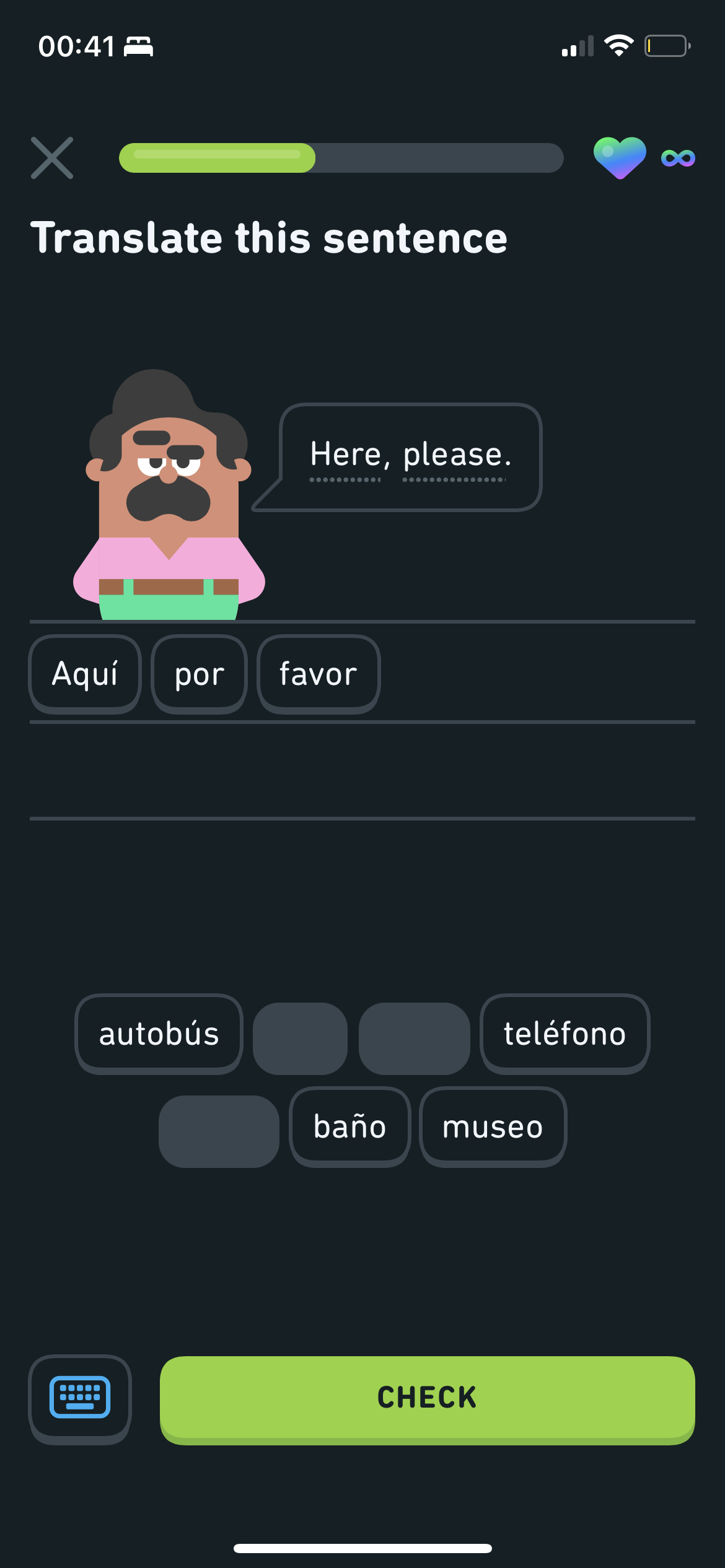
Since I last tried, it was significantly changed to the point it was completely unrecognizable, but it was fun and it kept being fun. You have to realize, I always loathed learning new languages and now I love doing Duolingo. My colleagues refer to it as a game and I too hop between calling it an app and a game. Naturally, I had to analyze why I changed my mind and how they were able to make me learn a new language and enjoy myself doing it.
My conclusion is that they’ve succeeded in making the learning process fun by ensuring that repetition is fun. Repetition is one of the most effective – if not the only effective way – of gaining new skills. And great games happen to be extreme masters in this skill.
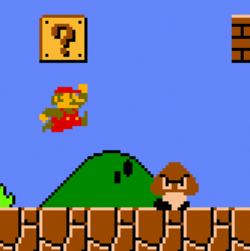
To give you an example of how games do this, I’ll take a quick look at Super Mario Bros. The classic platform game that sees you jumping around as Mario. What this game does so well is in its pure celebration of the run and jump mechanics. Through the carefully design obstacle courses and enemy designs, Miyamoto and his team create a game that makes sure you enjoy jumping at the beginning of the game and hours later you still enjoy the same running and jumping.
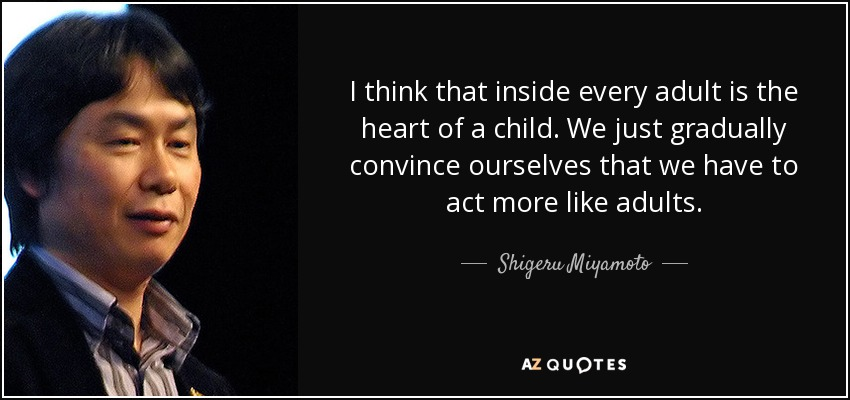
Miyamoto is famously quoted by his design philosophy of “finding the fun”. My own understanding of this design philosophy is that it’s a process that requires an intimate relationship between game designer and the game, which forms through endless repetition and closely monitoring how you feel while performing in your own game. Extreme attention to detail is important as you want to be sure you capture the nuances of what feels like fun and what becomes boring after an endless amount of time spent in the game. Once you identify what feels right and keeps feeling great, you’ll try to amplify that feeling by adjusting the game design to accommodate more of that while trying to tone down all the things that make the experience repetitive and boring. And although you want to minimize boring and repetitive, in essence the game mechanics are repeated over and over, like the countless jumps Mario makes in his famous game.
Now bring that back to many forms of serious games and edutainment and you’ll start to see that the focus of these games are not on repeating the “material” over and over, but rather the opposite, by blasting through the content at a pace that’s hard to keep up with and adding all the other stuff that games do well. Rewards, progression structures, accolades, interactivity.

The essence of learning is in the repetition and those that succeed in learning something new are able to identify the fun in this repetition. And I think this is one of the key lessons that Duolingo taught me, they made sure that the repetition that’s needed to learn a new language is kept fun. It’s kind of ironic for me to learn a new insight in game design from an app about language.
There’s another insight that I’ve become more aware of thanks to Duolingo, and that’s that games provide a very natural structure of learning and progress. They present challenges that can be overcome once the player is ready to overcome them. Think again about Mario’s game. With level becoming harder to clear and when the player fails she needs to repeat the same part for as long as is required for her to have learned the necessary skills to progress.
Now, let’s imagine for a minute what our school system would look like if it actually operated like that. Sure, there are tests that result in a score and based on that score a student progresses, but the costs are enormous. Failing a class often results in repeating an entire year, including all the other lessons that you were able to succeed in. It’s like playing 20 different games and finishing 19 of them, but having to start them all over from the start because you failed at 1 of them. The cost is too high, so the student settles to “play games” of a lesser quality the next year in a different – lower education – school.This thought makes the school system so outdated and wrong in so many ways it makes me sad.
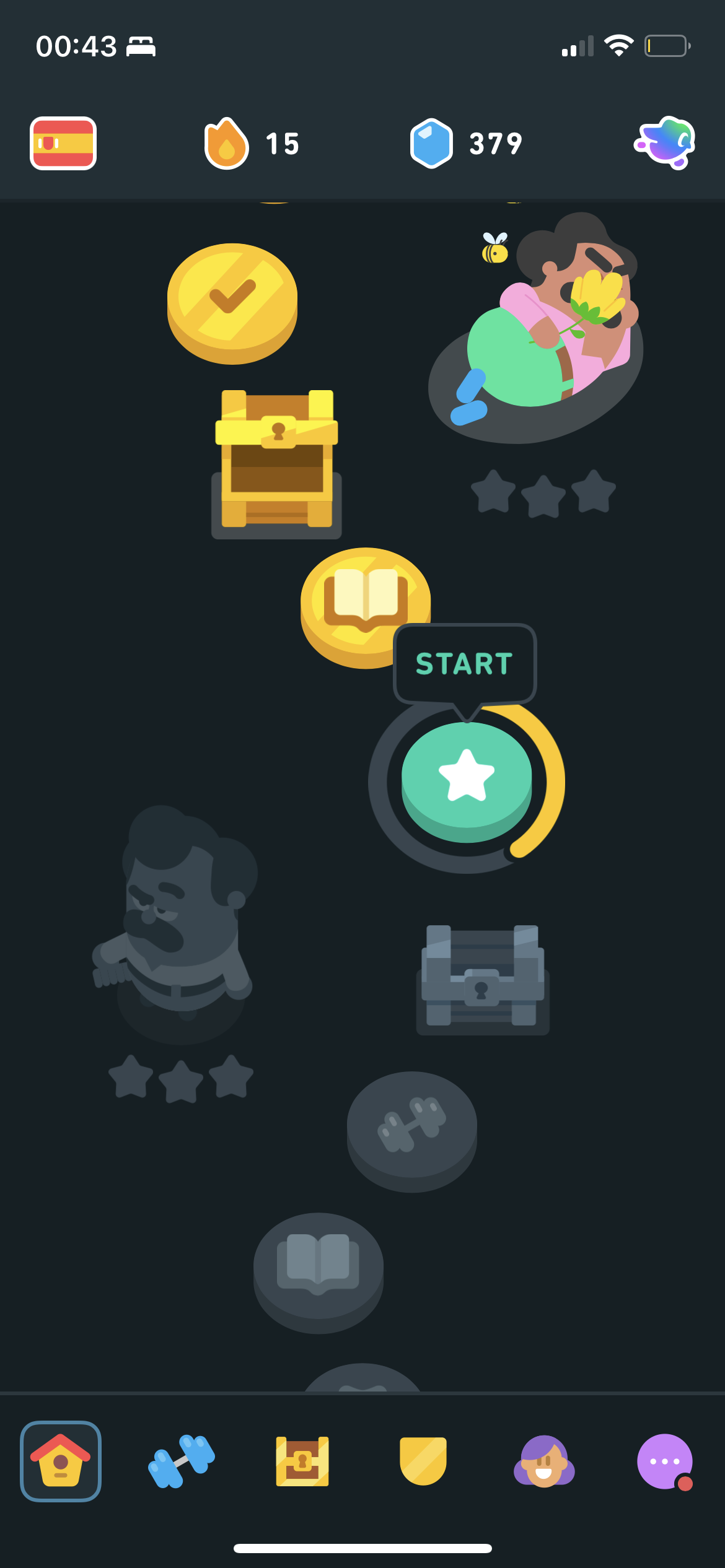
Duolingo allows you to progress at your own pace by offering a lot of repetition as the default and “jump aheads” to skip parts if you feel you can go faster. Duolingo allows you to cheat, by peeking at translations and repeating exercises that you failed earlier. With every lesson you do you feel you made progress, because it is visualized like a map going forward and the smart addition of a “come do a lesson every day streak” that makes you feel proud to keep up. Everyday, they make me feel like a winner, because it’s easy. It’s easy because it reduces the amount of new things I need to learn to a minimum, making actual learning maybe slower than you’d expect, but easy and thorough. Repetition is made fun on many levels. Adding different ways to learn the same words, the same sentences, the same expression, with characters you come to love through their characteristic animations and voices, through the tap word to make sentences, through finding word pairs, typing, speaking, and rewarding and encouraging animations that keep telling you are doing a great job. No wonder my colleagues call it a game! It is a game! Duolingo knows that repetition is at the heart of learning and they’ve created it their mission to make repetition fun and progress natural and tailored to the player, rather than the curriculum.

And here’s what Duolingo, great games and the best teachers have in common. They’re all experts in finding the fun in repetition within their respective subject matters, whether that’s learning a new language, jumping or teaching history.

 Tj'ièn